
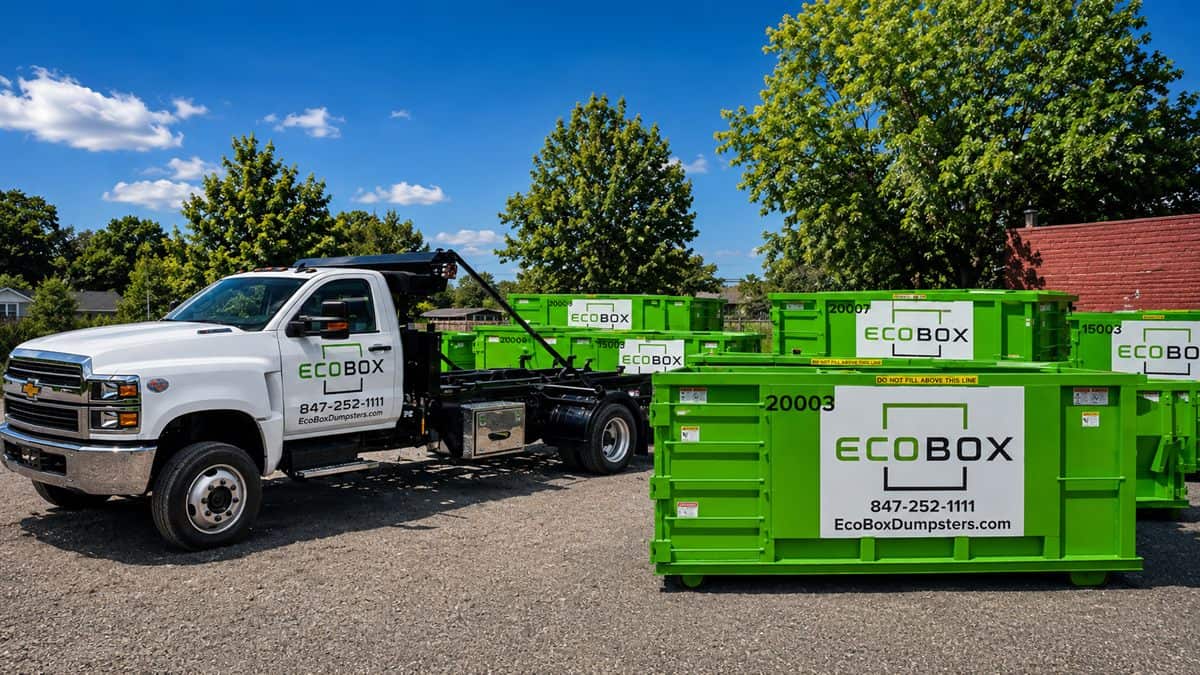
Driveway-safe dumpster rental matters a lot more than most people think. A roll-off container can make a cleanout or remodel simple, but the wrong setup can leave cracks, dents, or deep marks in your driveway that stick around long after the debris is gone. When the busy project season hits in Lake County, more homeowners and contractors start looking for options that will not hurt asphalt, concrete, or pavers.
Traditional roll-off dumpsters can put a huge amount of weight on just a few small contact points. If that weight is not spread out, your concrete can crack, your asphalt can rut, and your pavers can shift or get scuffed. The risk is higher if the driveway is older, already patched, or sits on a weak base.
Driveway-safe is more than a buzzword. It involves container design, how and where the driver places the dumpster, what type of protection goes under it, and how you load your debris. As a North Chicago-based company serving Lake County and Northeastern Illinois, we focus on compact, driveway-friendly roll-offs that respect the surface you worked hard to install.
When we say driveway-safe, we are really talking about how much pressure your pavement feels and how well that pressure is controlled. A driveway-safe dumpster setup:
Driveway-safe does not mean there is zero risk. No container is completely harmless if it is overloaded, set on a cracked corner, or dropped on soft, damaged, or unprepared ground. Even a smaller dumpster can leave impressions if it is packed with heavy material and placed without driveway protection.
EcoBox uses a mix of compact trucks, careful placement, and the RolliSkate system, which sets the container down on rollers rather than dragging it across the surface. Operators are trained to spot weak spots and talk through placement options before they lower a container. This matters even more in older Lake County neighborhoods where driveways may be thinner, patched, or built on less stable base material that moves more under load.
Different dumpsters rest on the ground in different ways. That contact style plays a big role in how driveway-safe your rental really is.
Many roll-offs use steel skids or rails that run along the bottom of the container. Others rely on wheels or rollers at certain points. Each choice changes how the weight is spread.
Skids generally:
Wheels or rollers:
Specialized driveway protection systems, including EcoBox’s RolliSkate, keep the container from being dragged across the surface, which is the usual cause of scraping. They spread the weight of the rails or wheels over a wider area and keep metal from digging into the surface. Compact roll-offs designed for residential driveways usually pair well with this type of setup, and trained drivers can decide when to add extra protection based on what they see on site.
Dumpster size and weight can be confusing. The yard rating tells you how much space you have, not how heavy the load can be. A smaller container filled with dense material might weigh as much as, or more than, a larger one filled with lighter trash.
Heavier materials include:
If these heavy items are piled in one corner or only at one end, all that weight bears down on a small part of your driveway. That is when you see dents, cracks, or wheel and rail marks. Overloaded containers can also lead to extra fees from landfills and haulers, along with higher risk to your pavement.
A few simple loading habits reduce stress on the surface under the dumpster:
When the driver knows what is going in the box, they can suggest an appropriate size and plan for extra protection if needed.
Not all driveways behave the same when a heavy container sits on them. Picking the right ground protection depends on what your surface is made of and what shape it is in.
Asphalt is a bit softer and more flexible, especially in warm weather and sunny driveways. Under a loaded dumpster, it can:
Asphalt generally benefits from a driveway-protection system that spreads the weight and avoids dragging.
Concrete is stronger, but it is not unbreakable. It is more likely to:
For concrete, good placement away from edges and over solid, flat areas is key.
Paver driveways look great but are usually the most delicate. Heavy loads can:
Here, how the container is set down matters most. EcoBox uses the RolliSkate system so it rolls into place rather than being dragged across the surface. Sometimes, placing the container partly in the street or on a concrete apron is safer than setting it fully on pavers.
A simple way to decide what you need is to look at:
If you see cracks, hollow-sounding spots, or sinking areas, it is smart to ask for heavier protection or a different placement spot.
Choosing the right driveway-safe dumpster rental starts with a few clear questions for any provider. Before you book, ask:
Match the size of the dumpster to both your project and your driveway. A small clutter cleanout on a strong concrete pad might need only a compact container and standard driveway protection. Roofing tear-offs, kitchen gut jobs, or concrete removal carry heavier loads and may call for different placement, extra protection, or sometimes a second haul instead of maxing out one box.
Local knowledge helps. A company that works in Lake County and Northeastern Illinois every day understands how freeze-thaw cycles, spring rains, and summer heat affect asphalt and concrete performance. They also tend to know neighborhood layouts, narrow alleys, and common driveway designs, which makes placement smoother.
Clear communication is just as important as equipment. It helps to:
When everyone is on the same page, your driveway is far more likely to come through the project in good shape, and your dumpster rental will feel like the helpful tool it is meant to be.
When you are ready to clean up your space without damaging your property, our driveway-safe dumpster rental makes it simple to move forward. At EcoBox Dumpsters, we help you choose the right size container, schedule delivery, and keep your project on track from start to finish. Tell us about your timeline and debris type, and we will handle the hauling so you can focus on the work that matters. If you have questions or need a custom recommendation, just contact us.
More on this: residential rentals, current pricing, or talk to us about your project.
More on this: the 10-yard container roofing debris goes in, construction dumpster rental, what can go in a dumpster.