
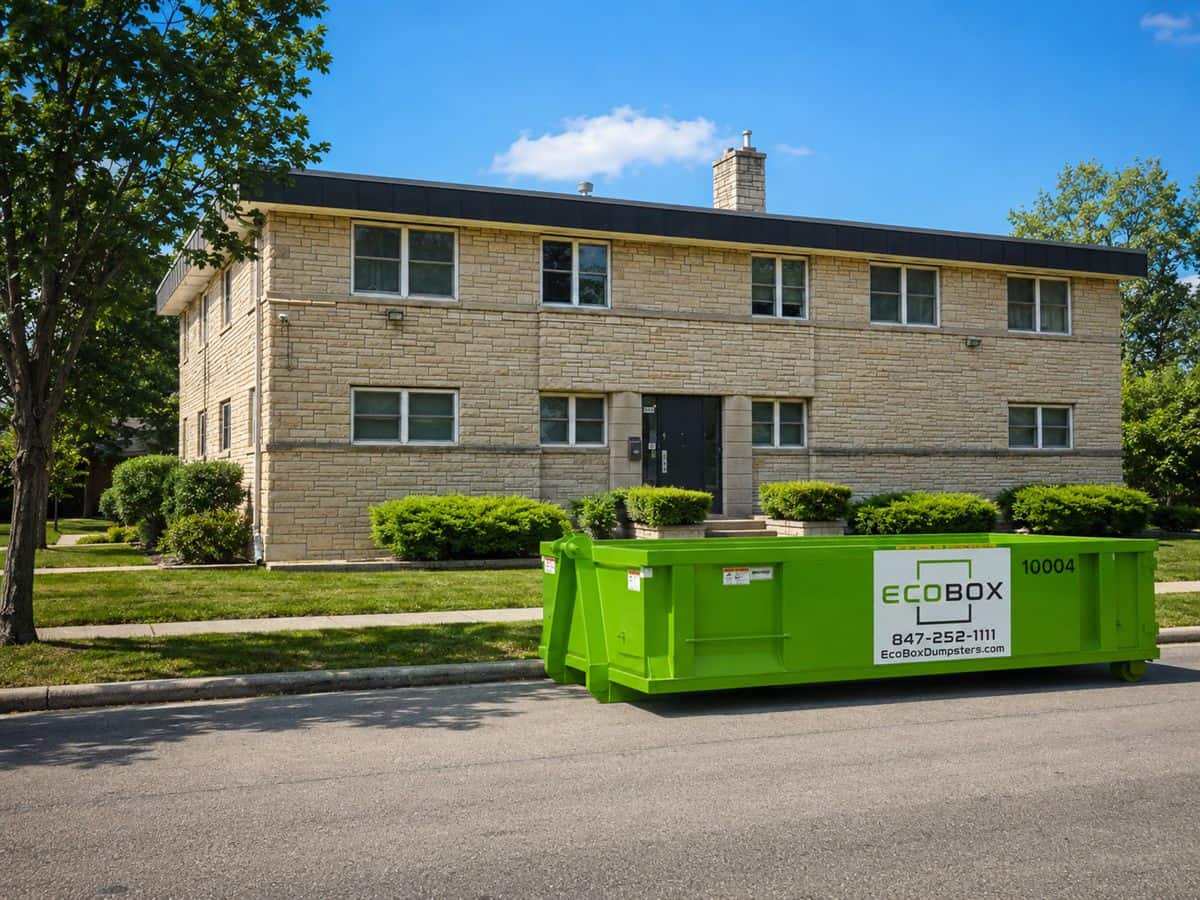
Home renovations create a lot more waste than most people expect. Old cabinets, broken tile, torn-out drywall, and flooring can stack up fast and slow your project if you are not ready for it. A smart waste plan keeps your work area clear, protects your driveway, and helps you stay on schedule.
Spring is a popular time for kitchen, bath, basement, and exterior projects in Northeastern Illinois. The weather is better, and many homeowners are ready to refresh their space after winter. When you plan for debris before the first hammer swing, you avoid stress, mess, and surprise fees at the end.
At EcoBox Dumpsters, we focus on driveway-safe roll-off containers that fit right into residential driveways around the North Chicago area. With a little planning, you can match your project to the right home renovation dumpster rental, sort materials as you go, and keep your job running smoothly from start to finish.
Before anyone starts tearing things out, it helps to list what will actually go into the dumpster. Different projects create different types of debris, and knowing this up front makes size and placement choices easier.
Common waste by project type includes:
You can estimate debris volume with a few simple ideas:
It is usually safer to slightly overestimate so you are not stuck with a container that fills up halfway through the job. Ordering a dumpster that is too small can lead to extra trips and delays, while having a bit of extra space is rarely a problem.
Also think about how debris will move from the work area to the dumpster. Plan:
Good flow keeps tools and walkways open, reduces tripping hazards, and saves labor time since no one is climbing over piles to reach what they need.
Once you have a rough idea of what is coming out, you can match your project to a dumpster size. For many home renovation dumpster rental needs, a few common sizes cover most jobs.
Here is a simple way to think about it:
Driveway protection is a big deal, especially in areas that go through winter freeze and thaw. Concrete, pavers, and asphalt can be more fragile after cold weather. A driveway-safe container, placed correctly, helps prevent scratches, gouges, and cracked edges.
When planning timing, talk through the following:
Lining up all of this with your contractor keeps everyone on the same page. A local provider that knows North Chicago neighborhoods can also help you think about driveway space, nearby sidewalks, and any rules from your town or homeowners association.
Renovations do not have to mean that everything goes straight to a landfill. With a little sorting, you can often send less to the dump and more to recycling or reuse.
It can help to separate:
On the flip side, not everything can go into a renovation dumpster. Items that are often restricted include:
Standard construction debris like drywall, wood, tile, and most fixtures are usually fine, but it is always smart to check before tossing something you are unsure about.
Even with a good plan, there are a few easy mistakes that can lead to extra fees or safety issues. Understanding the included weight and fill lines is one of the biggest keys.
Heavy materials add up fast, including:
These items can reach a dumpster’s tonnage allowance long before the container looks full. This is why some projects benefit from a separate container size or a different plan for heavy debris. Keeping material below the marked fill line is also important so the driver can tarp and haul the load safely.
Spring projects in Northeastern Illinois often come with wet ground, leftover snowmelt, and rain. Placing the dumpster on stable, solid ground helps avoid:
A few simple best practices go a long way:
Clear rental guidelines and upfront terms help you know what is allowed, how the included weight works, and what to expect at pickup. This keeps your renovation budget focused on the work itself, not surprise add-ons.
A clean, organized renovation starts with a thoughtful waste plan. When you map out your debris, choose the right home renovation dumpster rental size, time your delivery and pickup well, and follow smart loading habits, your project runs smoother from demo to final cleanup. Sorting what you can and avoiding restricted items keeps your project more eco-friendly and can reduce hassles later.
EcoBox Dumpsters is based in the North Chicago area, and we focus on driveway-safe containers for homeowners across Northeastern Illinois. With the right container, careful placement, and a clear plan, your spring renovation can be safer and cleaner from day one.
Make your renovation smoother by letting EcoBox Dumpsters handle the debris from start to finish. Choose the right size home renovation dumpster rental for your space and schedule, and we will deliver it where and when you need it. If you have questions about sizing, pricing, or availability, simply contact us and we will help you plan the best option for your project.
More on this: residential rentals, current pricing, or talk to us about your project.
More on this: the 10-yard container roofing debris goes in, construction dumpster rental, who is responsible for a dumpster permit.