
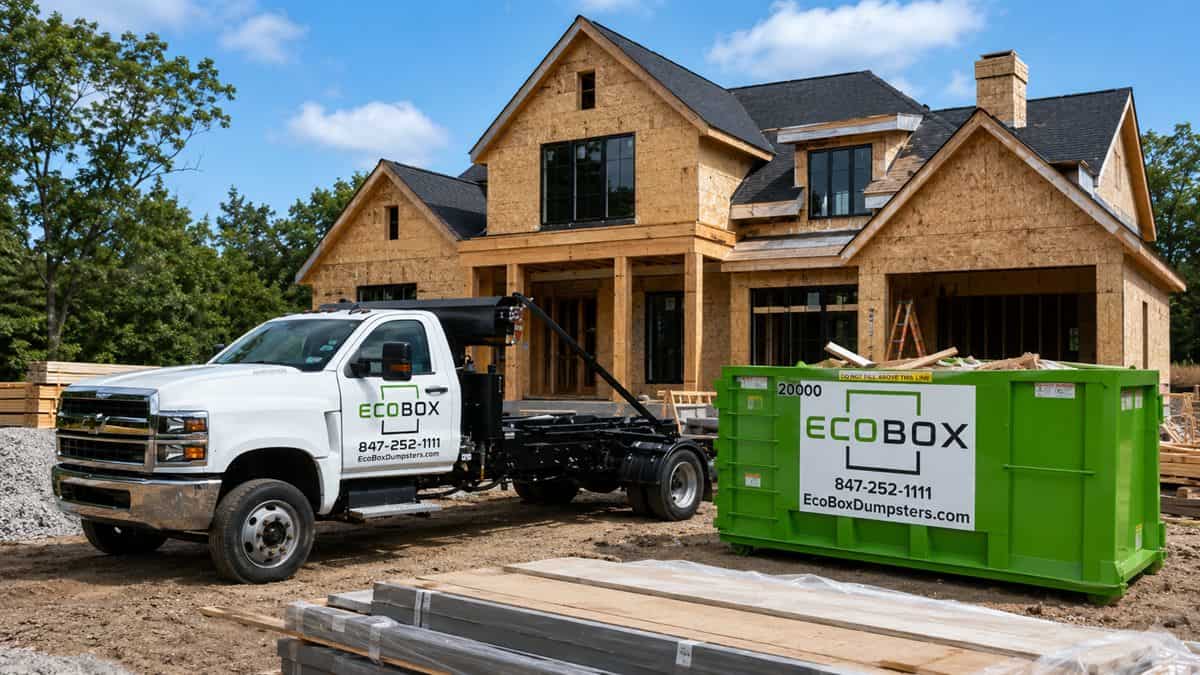
A construction site without a dumpster plan fills up with debris faster than most people expect. From the first swing of a sledgehammer, scrap lumber, torn-off roofing, and broken drywall start piling up, and if they do not have a place to go, your project quickly gets less safe and less efficient. A well-planned construction dumpster rental keeps that debris contained so your crews can move freely, trades can work without tripping over piles, and inspections are easier to pass.
When we talk about construction dumpster rental, we mean temporary roll-off containers designed specifically for construction, renovation, roofing, and demolition debris. These dumpsters are built for heavy materials and high volumes, which sets them apart from smaller household cans or permanent commercial bins. At EcoBox Dumpsters, we are a local North Chicago dumpster rental company providing driveway-safe roll-off containers for projects across Northeastern Illinois, so you can keep your site organized from day one.
Every contractor and property owner in Illinois benefits from treating debris management as part of the job, not an afterthought. Loose boards with nails, broken tile, and sharp offcuts become trip hazards and puncture risks when they are scattered around the site. When debris goes straight into the dumpster instead of onto the ground, you reduce the chances of injuries and the downtime that follows.
A clear dumpster plan also helps the work move faster. Crews should know exactly where to toss materials so they are not stacking scrap in one corner, then loading it into wheelbarrows, then moving it again later. When you have an accessible dumpster in the right spot, you cut out that double-handling. That means:
Here in Northeastern Illinois, you also need to think about local and state waste expectations. Municipalities can be particular about how construction debris is stored and hauled away, especially near public streets and alleys. A planned approach to your dumpster rental, including placement and timing, helps you stay aligned with regulations and avoid issues with inspectors or neighbors.
Picking the right dumpster size is one of the most important choices you make before demolition or framing starts. Different Illinois projects call for different container sizes. For example, smaller roll-offs often work for:
Larger dumpsters are a better fit for:
If you underestimate the size you need, you may run into overflowing loads, extra hauls, or overweight fees, any of which can cut into your budget. Overestimating can also cost you, because you may pay more than necessary for capacity you never use. The goal is to right-size the container so it matches your project scope, site access, and schedule.
At EcoBox Dumpsters, we work with property owners, remodelers, and contractors in North Chicago and surrounding communities to match dumpster size to the project. By talking through what you are tearing out, how long the job will run, and where we can safely place the container, we help you find a size that fits your work and your property.
Most general construction, renovation, and demolition debris can go into a construction dumpster. Typical accepted materials include:
There are also materials that are commonly restricted or regulated in Illinois. These can include certain paints and solvents, some appliances and electronics, and any hazardous or contaminated material. Items like these often require special handling or separate disposal methods that differ from standard construction debris.
Because rules vary between municipalities and disposal sites, it is always smart to ask us about specific materials before tossing them into your rented dumpster. A short conversation upfront can help you avoid contamination issues, extra fees, or even rejected loads at the dump or transfer station.
The rental process is straightforward when you know the steps. In general, construction dumpster rental in Northeastern Illinois looks like this:
Local logistics can affect how we plan your rental. Some municipalities require permits if a dumpster sits in the street or in certain public areas. There can be placement rules near alleys, sidewalks, or fire lanes, and those rules influence where we can set the container. We are familiar with many of these local details across Northeastern Illinois and can talk through options before delivery.
Timing matters as well. It helps to coordinate delivery with the start of demolition or tear-out so crews are not waiting for a container or working around growing piles of debris. Planning ahead also lets you avoid last-minute changes, rush requests, or delays during key inspections.
Many homeowners and small commercial property owners worry about what a heavy roll-off will do to their driveway. When we say driveway-safe dumpsters, we mean we take practical steps to help protect the surface under the container. We use our RolliSkate driveway-protection system to set the container down on rollers instead of dragging it, which helps reduce the risk of scrapes or gouges.
Good placement is just as important as protection. For residential projects, the driveway is often the best spot because it keeps the dumpster close to the work while staying off the street. For commercial properties or active construction sites, we look for areas that balance access, safety, and the need to protect pavement or nearby landscaping.
Our team works in North Chicago neighborhoods and tight urban lots on a regular basis, so we are used to finding placements that work within limited space. By talking through access points, garage locations, and traffic patterns, we help you position the dumpster where it supports the work without getting in the way.
Some clean, separated materials, such as scrap metal, clean concrete and untreated wood, can go to a local recycler instead of the dumpster, depending on what facilities near you accept. If you want that, keep those materials separate and out of the container.
A dumpster keeps the rest of the debris in one place, which means less loose material blowing into streets, storm drains or neighboring properties.
EcoBox does not sort or recycle what goes in the container: loads go to the disposal site under its acceptance rules. Ask us about specific materials before you load them.
When you have the right construction dumpster rental in place, everything on your Illinois jobsite gets a little easier. Crews spend more time building and less time hauling scrap, walkways stay clear, and compliance with local expectations is simpler. A smart dumpster plan protects your budget, schedule, and property from the first day of demolition to the final walkthrough.
Planning those details early matters. Deciding on size, placement, timing, and acceptable materials at the beginning of the job keeps you out of last-minute scrambles and guesswork. With local dumpster support from a North Chicago-based provider that understands Northeastern Illinois projects, you can focus on completing quality work while your debris is handled safely and efficiently.
If you are ready to keep your job site cleaner and more efficient, our construction dumpster rental services make it simple to handle debris from start to finish. At EcoBox Dumpsters, we help you choose the right size container and schedule delivery and pickup around your timeline. Reach out so we can walk you through options, pricing, and availability for your project, or contact us with any questions.
More on this: construction rentals, current pricing, or talk to us about your project.
Working out the detail: the construction dumpster service page covers what a jobsite rental includes, current pricing shows the price, included weight and per-ton rate for each size, and what can go in a dumpster lists accepted and prohibited material. Concrete, brick, dirt, rock, asphalt and roofing debris go in the 10-yard container only, whatever the total amount. If the container goes on the street, the permit guide explains whose responsibility that is, and debris removal for small contractors covers keeping a smaller site tidy.