
By EcoBox Dumpsters Editorial Team · Updated 2026-07-25
Residential dumpster rentals suit homeowner projects like renovations, garage cleanouts, and landscaping debris, typically with shorter rental windows and smaller container sizes. Commercial dumpster rentals serve contractors, property managers, and businesses handling renovation, turnover or large-scale construction debris, often requiring bigger containers and flexible scheduling. EcoBox Dumpsters serves both across Lake County and Northern Cook County, matching container size to project scope.
Key Takeaways About Residential and Commercial Dumpster Rentals
- Residential dumpsters serve homeowners and small projects, while commercial dumpsters handle business and contractor waste needs.
- Commercial dumpsters accommodate larger volumes, making them suitable for ongoing business operations and construction sites.
- EcoBox Dumpsters is based in North Chicago, IL and serves residential and commercial customers across Lake, McHenry and northern Cook Counties and Kenosha County, WI.
- Project size determines dumpster selection, with residential for cleanouts and commercial for sustained business waste management.
Why Does Project Type Decide Your Dumpster Choice? Understanding Scope and Needs
Project scope drives every dumpster decision, from container size to rental length. A weekend garage cleanout generates a fixed pile of debris. A construction job or retail renovation produces waste continuously for weeks or months. That single difference between one-time cleanup and an ongoing waste stream shapes the residential vs commercial dumpsters comparison more than any other factor.
Homeowners typically need short-term rentals for defined jobs, such as a bathroom remodel, a landscaping overhaul, or an estate cleanout, but may also require longer rentals for larger projects. Contractors, property managers, and business owners usually need something built for volume and duration, with pickups scheduled around an active work site. Matching your rental to the actual scope keeps you from overpaying for space you won’t fill or running out of room mid-project.
What Factors Determine the Right Dumpster Type for My Project?
The materials you’re disposing of matter just as much as the amount. Yard waste, furniture, and household debris differ from construction scrap, packaging, or ongoing business refuse, and those disposal differences affect which container fits your job. Rental duration follows the same logic — a few days for a cleanout, weeks or months for a build-out.
Here’s a quick way to think about it:
- Home projects: shorter timelines, defined debris volume, one drop-off and pickup
- Business or contractor projects: longer timelines, recurring waste, possible multiple swaps
EcoBox Dumpsters works with homeowners, contractors, and businesses across Lake County and Northern Cook County, matching dumpster types to real project needs. The goal stays consistent: make waste removal easier to plan, easier to manage, and easier to complete, no matter who’s renting.
What Defines a Residential Dumpster Rental? Features and Practical Applications
A residential dumpster rental serves one home project at a time, built around a short rental window rather than an ongoing waste contract. Homeowners rent by the job — a weekend cleanout, a kitchen remodel, a landscaping overhaul — not by the month. That short-term, project-based structure separates residential vs commercial dumpsters from the start.
Size and placement matter just as much as timing. EcoBox Dumpsters offers 10-yard, 15-yard, and 20-yard roll-off containers, sized to match most home projects without forcing you into oversized commercial equipment. Each of these dumpster types fits comfortably on a standard driveway, so you avoid blocking a sidewalk or damaging landscaping.
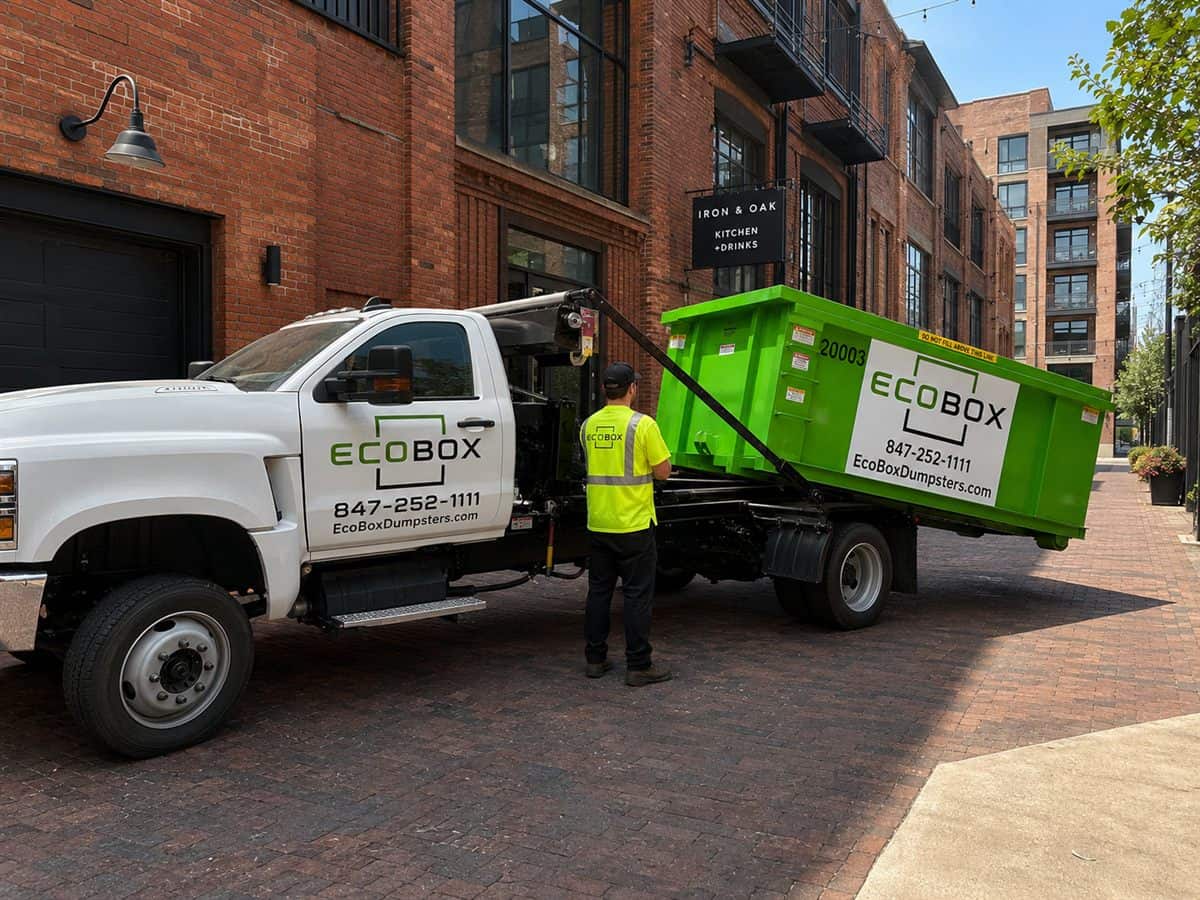
Compact footprint is the real differentiator here. EcoBox’s containers are delivered with smaller-format trucks and set down with the RolliSkate placement method.
Container Sizes and Included Weight for Residential Dumpsters
Residential roll-off dumpsters from EcoBox come in 10, 15, and 20 cubic yards. Typically:
- 10-yard: Suitable for small cleanouts or minor renovations. Included weight allowance: see the pricing page.
- 15-yard: Ideal for mid-sized remodels or garage cleanouts. Included weight allowance: see the pricing page.
- 20-yard: Best for larger home projects like full remodels. Included weight allowance: see the pricing page.
These dumpsters are designed for typical household waste, yard debris, and furniture, keeping weight and size manageable for the delivery surface.
Residential Dumpster Placement and Permit Requirements
Residential dumpsters usually sit on private property such as driveways or yards, avoiding the need for permits. However, if placement on public streets or sidewalks is necessary due to space constraints, local permits must be obtained. Obtaining the permit is the homeowner’s responsibility; EcoBox does not apply for permits. Confirm the requirement with your municipality before your delivery date.
How Do Commercial Dumpster Rentals Work Differently? Operational and Waste Management Insights
Commercial dumpster rentals solve a different problem than residential ones: continuous output instead of a one-time pile of debris. Businesses, construction sites, and industrial operations generate waste on a schedule, not just once during a cleanout weekend. A retail store, a restaurant, or a job site producing debris week after week typically needs a larger container and planned swaps.
That’s the core distinction between residential vs commercial dumpsters. Residential rentals typically handle a defined project with a clear end date. Commercial rentals are built for ongoing, higher-volume waste management, which means longer relationships, repeat pickups, and service that flexes as your operation changes.
EcoBox Dumpsters supports this need directly, offering commercial dumpster rental alongside residential and construction options. Contractors and business owners across Lake County and northern Cook County rely on this range of dumpster types to match the right container to the right job, whether it’s a single-family cleanout or a multi-week commercial project.
Commercial Dumpster Container Sizes, Types, and Included Weight
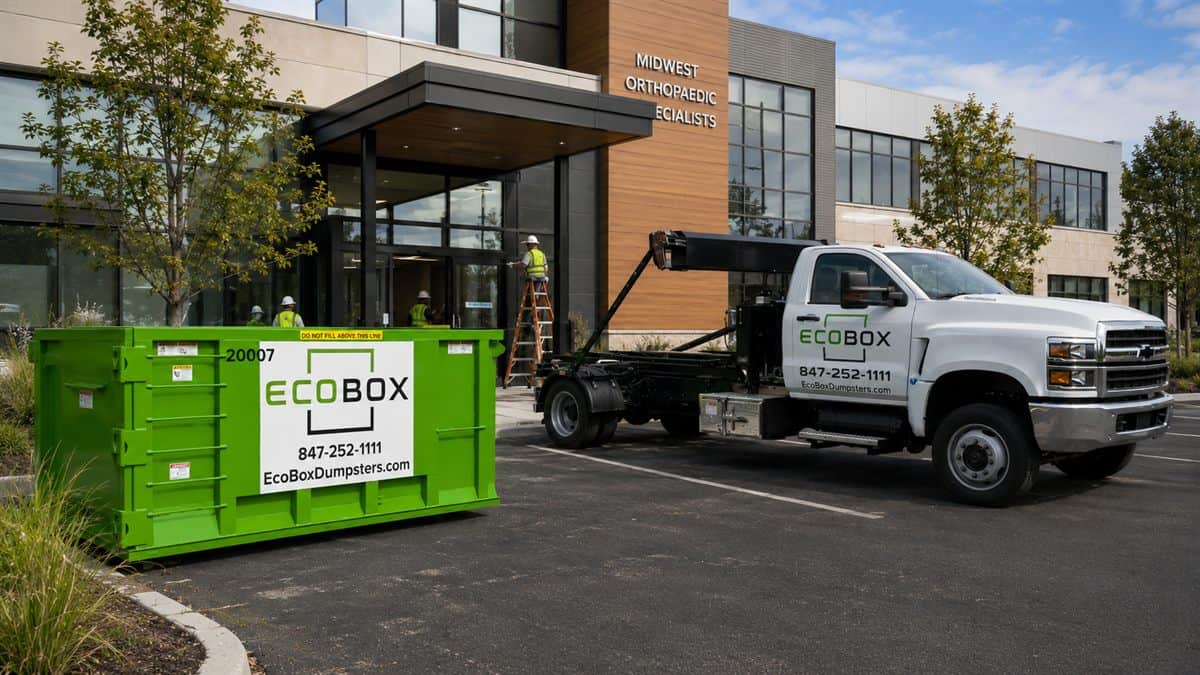
Across the industry, commercial waste service often means front-load dumpsters emptied on a route, in sizes from 2 to 8 cubic yards. EcoBox does not supply front-load bins. Its commercial work uses the same 10-, 15- and 20-yard roll-off containers, either as a one-off rental or on a recurring schedule quoted separately.
- EcoBox roll-off containers: 10, 15 and 20 cubic yards, with included weight allowances of 1, 1.5 and 2 tons respectively. Front-load bins of 2 to 8 cubic yards are a different product that EcoBox does not supply.
Commercial Waste Placement, Permit, and Zoning Requirements in Northern Illinois
Placement of commercial dumpsters follows stricter regulations than residential counterparts. In Northern Illinois, dumpsters placed on public property require permits from local municipalities, and zoning laws may restrict dumpster locations near businesses.
Additionally, some commercial districts have limits on container size, placement duration, and require proper signage and lighting for safety. Businesses must comply with environmental rules regarding waste types, especially hazardous materials. Businesses and contractors obtain their own permits and zoning approvals. EcoBox places the container where you tell us the approval allows.
Can Contractors Use Residential Dumpsters for Small Jobs?
Sometimes, yes. Contractors working on small, short-term projects that generate limited debris can use the same 10, 15 or 20-yard roll-off dumpsters that homeowners rent.
However, heavy materials such as concrete, brick, dirt, rock, asphalt and roofing go in the 10-yard container only, whatever the size of the job; a larger amount means more 10-yard loads.
Which Dumpster Size Matches Your Project Scope? Size Selection Guidance for Optimal Efficiency
Project scope, not guesswork, determines dumpster size. Renovating a kitchen calls for a different container than clearing debris from a commercial parking lot. Order too small, and you’ll pay for a second haul-away. Order too large, and you waste money on space you never fill.
Home projects usually fall into a predictable range. Residential vs commercial dumpsters differ mainly in scale: home renovations and cleanouts typically require containers between 10 and 20 cubic yards. That size range handles flooring tear-outs, garage cleanouts, and small remodels without crowding your driveway.
Business and contractor projects need more capacity. Larger jobs and ongoing commercial waste streams call for dumpsters in the 20 cubic-yard range. A property manager clearing multiple units or a contractor running a demolition site generates far more debris than a single household ever will.
EcoBox Dumpsters keeps sizing simple for this exact reason. Three dumpster types cover most needs across the service area:
- 10-yard roll-off — roofing tear-offs, small cleanouts, single-room renovations, yard debris
- 15-yard roll-off — mid-size remodels, garage or basement cleanouts
- 20-yard roll-off — larger renovations, small commercial projects
How Do You Know Which Size to Order? Expert Tips for Accurate Volume Assessment
Match the container to your debris volume, not your budget alone. Underestimating volume causes the most common rental mistake among first-time renters. When you’re unsure, describe your project details, and staff will help you land on the right fit before delivery day.
Can One Dumpster Size Work for Both Home and Business Jobs? Exploring Flexible Rental Options
Sometimes, yes. A 20-yard roll-off often bridges the gap between a large home renovation and a small commercial job. Matching size to scope from the start keeps your project moving and your dumpster scheduled without confusion.
How Do Pricing and Rental Terms Compare? Understanding Cost Structures and Scheduling Differences
Pricing structure and rental length depend on whether your project is a one-time home job or an ongoing business operation. Home cleanouts typically run on a flat rate for a set number of days. Business accounts often need recurring service scheduled over weeks or months. Knowing this distinction upfront helps you avoid unnecessary costs and keeps your project moving without unexpected delays.
Rental terms shift once you compare disposal differences between household debris and commercial waste streams. A weekend renovation calls for a short-term rental. A contractor managing a multi-phase build often needs a dumpster on-site continuously, with swaps timed around work progress rather than a calendar deadline.
What Affects the Cost of a Dumpster Rental? Key Pricing Factors
Cost depends on project length, waste volume, and how often the container needs servicing. EcoBox Dumpsters provides affordable roll-off dumpster rental with transparent pricing and delivery. You know upfront what you’re paying for before the truck ever arrives.
Is Scheduling Different for One-Time Versus Recurring Rentals? Service Flexibility Explained
Scheduling works differently depending on how often you need service. A single cleanout requires one delivery and one pickup. A business or construction site may need repeat swaps timed to keep work uninterrupted.
EcoBox Dumpsters simplifies both scenarios through simple online ordering with secure payments. You can book a one-time rental for a garage cleanout in minutes. Book repeat rentals and swaps for an active job site, all without phone tag or guesswork. That kind of flexibility matters most when you’re comparing residential vs commercial dumpsters and trying to match the right term length to your actual project timeline, not an arbitrary rental period.
What Waste Types Belong in Each Dumpster? Waste Segregation and Compliance for Efficient Disposal
EcoBox uses the same 10, 15 and 20-yard containers for household and construction debris, so what matters is size and material. Concrete, brick, dirt, rock, asphalt and roofing go in the 10-yard container only, and prohibited items can get a load rejected at the disposal site.
Choosing between residential vs commercial dumpsters starts with knowing what you’re throwing away. A home cleanout or landscaping job generates old furniture, broken appliances, branches, and general junk. EcoBox Dumpsters handles this category with roll-off rentals: you load the container, and EcoBox hauls it away.
A larger job site changes the equation entirely. Contractors tearing out drywall and flooring create more volume, so a 15 or 20-yard container often fits. Concrete, brick and other heavy debris still go in the 10-yard container only, however large the job.
Can You Put Construction Debris in a Residential Dumpster? Important Considerations
Yes. EcoBox uses the same containers for home and construction debris. Drywall, flooring and framing can go in any size, while concrete, brick, dirt, rock, asphalt and roofing go in the 10-yard container only; a larger amount means more 10-yard loads.
Understanding these disposal differences protects your budget and your timeline. Waste type is one of the core factors, alongside size and rental duration, that separates a residential rental from a commercial one.
Matching your project to the correct dumpster types up front keeps your rental efficient. Sort your materials before your bin arrives, and you’ll avoid last-minute headaches on pickup day.
Whether you’re managing a home renovation or overseeing a commercial project, selecting the right dumpster rental aligns your waste disposal with your specific operational needs. Residential and commercial solutions each address distinct volume requirements, frequency patterns, and material types. EcoBox Dumpsters serves both, helping North Chicago area customers and businesses complete their projects with confidence.
Local Waste Compliance and Permit Guidelines for Dumpster Rentals
EcoBox Dumpsters follows local, state and federal disposal rules and the disposal site’s acceptance rules. Compliance requirements vary depending on the project type and location within Lake County and Northern Cook County, Illinois. Familiarity with these guidelines helps renters avoid fines and service interruptions.
Residential Dumpster Permits and Regulatory Requirements
For residential dumpsters, permits are generally not required when placing containers on private property such as driveways or yards. However, if the dumpster needs to be placed on public streets or sidewalks, a permit from the local municipality is mandatory. Obtaining that permit is the customer’s responsibility; EcoBox does not apply for permits.
Commercial Dumpster Permits and Environmental Compliance
Commercial dumpster rentals often require more extensive permits and adherence to environmental regulations, especially on construction sites or business premises. Contractors and businesses must obtain appropriate permits for dumpster placement on public property and comply with zoning and safety codes. Additionally, materials such as hazardous waste or certain construction debris require special handling and disposal methods in compliance with EPA regulations.
Who obtains the permit
Obtaining a permit is the customer’s responsibility. EcoBox can say which department to ask about local permit processes and waste management compliance. EcoBox places the container where your approval allows and can tell you which materials are prohibited.
Expanded FAQ Section: Comprehensive Dumpster Rental Guidance
What is the main difference between residential and commercial dumpster rentals?
Residential dumpsters serve homeowner projects like cleanouts and remodels with short rental windows and smaller containers. Commercial dumpsters handle ongoing contractor and business waste with larger containers and flexible scheduling to accommodate continuous waste streams.
What sizes of dumpsters does EcoBox Dumpsters offer for home and commercial projects?
EcoBox Dumpsters offers 10, 15 and 20-yard containers for both home and commercial projects. Restaurants, retail stores and offices that need regular collection can ask about a recurring roll-off schedule, which EcoBox prices separately by quote. EcoBox does not supply front-load bins.
Are permits always required for dumpster placement?
Permits are typically required if the dumpster will be placed on public property such as streets or sidewalks. For placement on private property like a driveway, permits are generally not necessary. Obtaining a permit is the customer’s responsibility; EcoBox does not apply for permits.
Can I dispose of hazardous or restricted materials in rented dumpsters?
No. Materials such as batteries, chemicals, asbestos, and certain electronics are prohibited in standard dumpsters. Disposal of hazardous waste requires specialized containers and licensed handlers. Contact EcoBox Dumpsters to discuss specific disposal needs and options.
How do I schedule pickup or arrange repeat services?
EcoBox Dumpsters offers flexible scheduling via online booking or customer service. For one-time cleanouts, request pickup when you are done; it is usually the next day and sometimes the same day. Commercial and construction customers can arrange ongoing pickups and container swaps to match their project timelines.
What happens if I need to extend my rental period?
You can keep the container past the 7 included days. Extra days are $20 each and run through the day the container is collected.
Does EcoBox sort or recycle loads?
No. EcoBox does not sort or recycle loads; they go to the disposal site under its acceptance rules. EcoBox Dumpsters is a proud 2026 member of the Illinois Recycling Foundation, supporting responsible waste management, recycling and sustainability efforts throughout Illinois.
Who can I contact for permit and compliance questions?
Permits are the customer’s responsibility, so permit questions go to your municipality; the Dumpster Permit Guide on this site is a good place to start. For questions about accepted materials, sizes or scheduling, contact EcoBox Dumpsters through our website or phone.
Need Help Choosing Your Dumpster Rental?
Contact the EcoBox Dumpsters team for expert advice on selecting the right dumpster size and scheduling deliveries tailored to your residential or commercial waste needs.
Related reading
- Why Your Business Needs Reliable Dumpster Solutions
- Inside Commercial Dumpster Rental for Busy Lake County Retailers
More on this: commercial rentals, current pricing, what can go in a dumpster, or talk to us about your project.
More on this: the 10-yard container roofing debris goes in, construction dumpster rental, residential dumpster rental.