
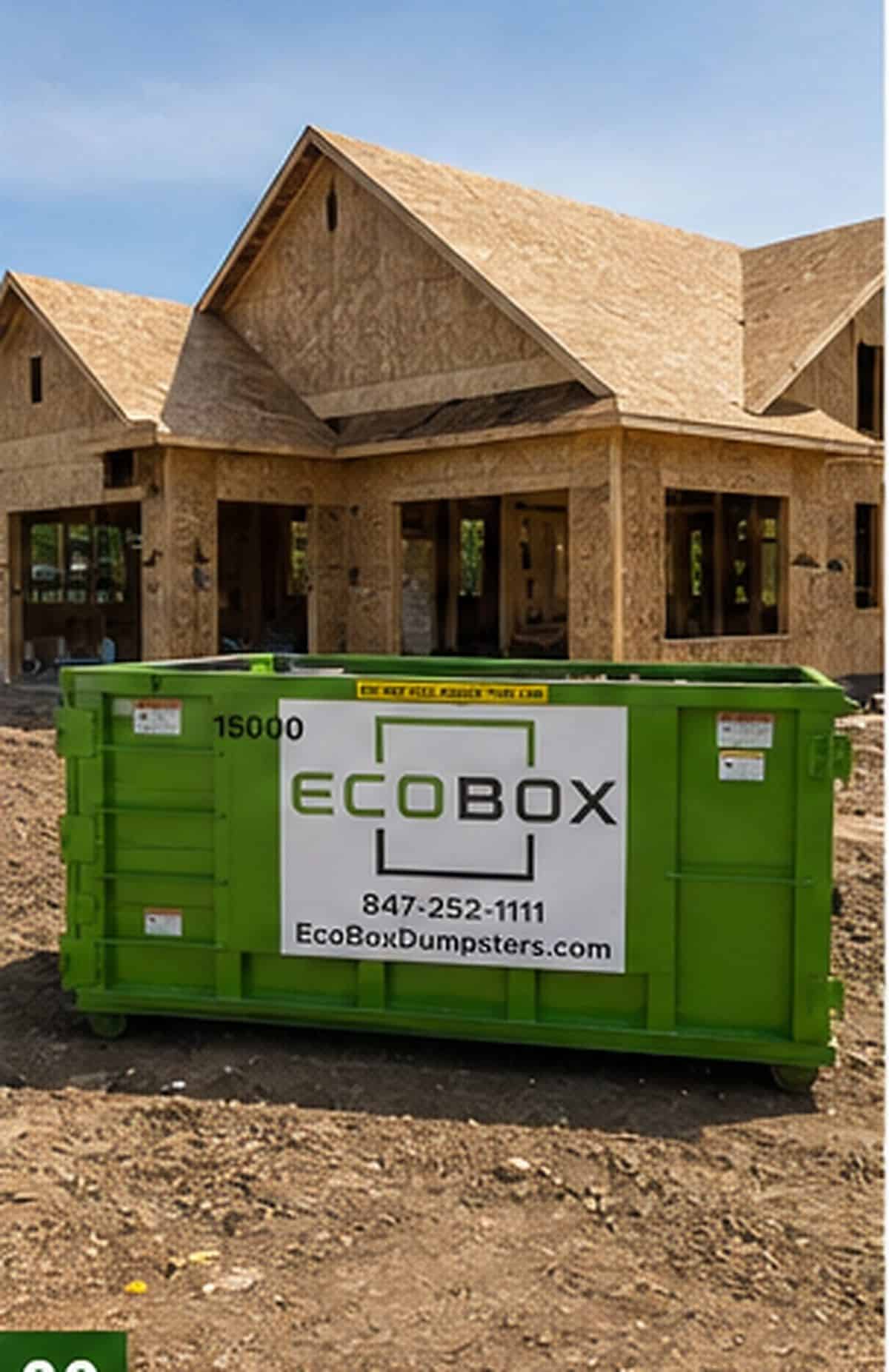
By Linda Ceja, EcoBox Dumpsters
Construction debris and yard waste need different planning. Debris is bulky and often heavy; yard waste is light but takes up room. This guide covers choosing a size, the materials that go in a 10-yard dumpster only, what can and cannot go in, placement and permits in North Chicago, and how the rental period and pickup work.
Choosing a Size
Each price covers delivery, pickup and seven days, and includes a weight allowance. Dimensions are representative; containers of the same size can vary.
- 10-yard: $395, 1 ton included, about 4 pickup-truck loads (14′ × 7.5′ × 3′ high)
- 15-yard: $445, 1.5 tons included, about 6 pickup-truck loads (14′ × 7.5′ × 4′ high)
- 20-yard: $495, 2 tons included, about 8 pickup-truck loads (14′ × 7.5′ × 5.5′ high)
Weight over the included amount is $100 per ton, based on the disposal site’s weight ticket. The size calculator recommends a size from a few questions about your project.
Heavy Material Goes in the 10-Yard Only
Roofing, concrete, dirt, rock, brick and asphalt go in the 10-yard dumpster only, whatever the size of the job. A larger amount means more 10-yard loads, never a 15 or 20-yard container. A call or text can confirm the material and load details.
Yard Waste
Yard waste is accepted and can be mixed with other accepted debris: grass, leaves, brush and branches. Soil and sod are heavy rather than bulky, so they go in the 10-yard dumpster only.
What Can and Cannot Go In
Most construction, renovation and household debris is accepted. Tires are accepted at $20 each, and mattresses and box springs at $100 each. A completely empty household latex paint can, with the residue fully dried and the lid off, is accepted.
Not accepted: hazardous materials and chemicals, wet paint, oil-based products, solvents, aerosol cans, commercial paint waste, batteries, electronics, appliances with Freon, and medical waste. The full list is on what can go in a dumpster.
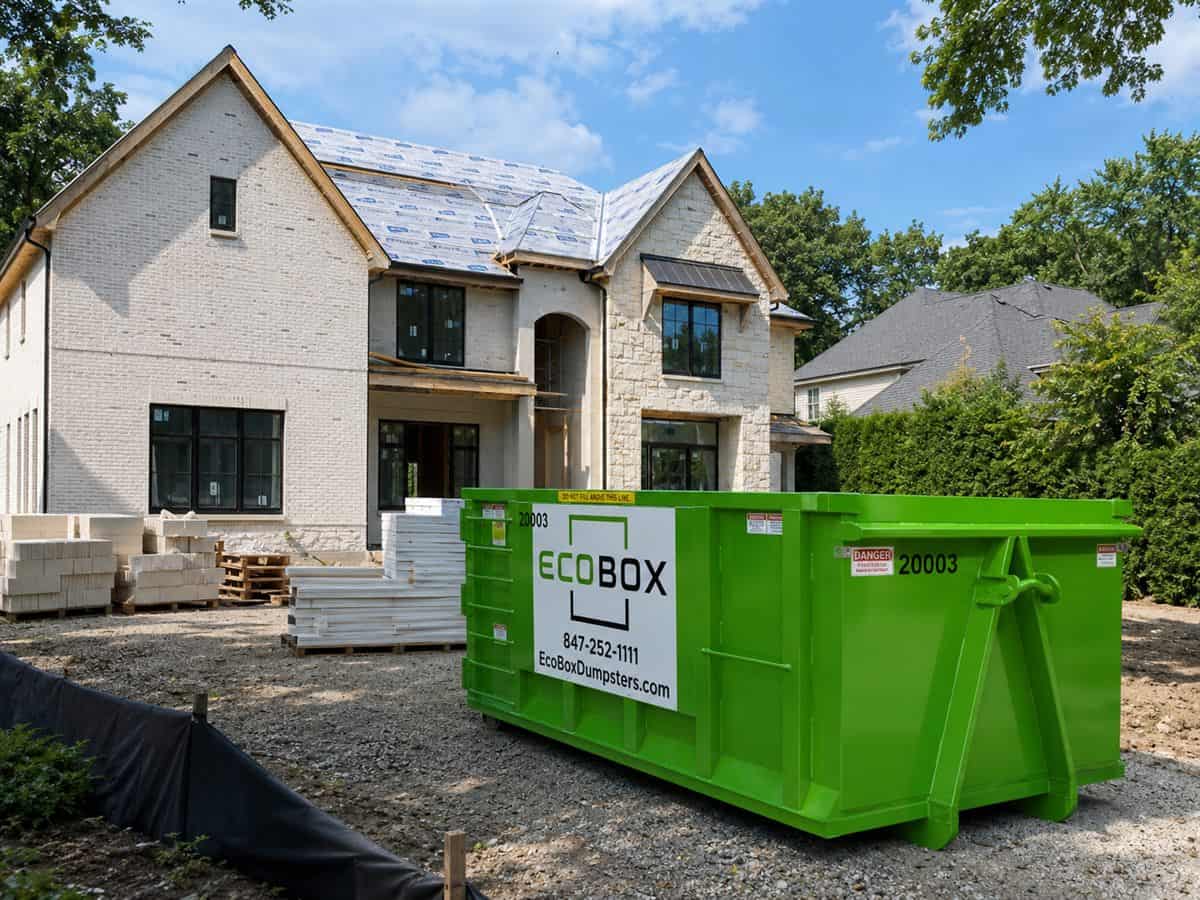
What actually happens to a construction load?
Most EcoBox loads go to a permitted disposal site rather than to a sorting line, so the practical way to divert material on a job is to keep it out of the container in the first place. Set clean metal aside for a scrap yard. Keep clean concrete and brick separate if a local recycler takes them. Route electronics, paint and batteries to a household or municipal collection. EcoBox publishes no recycling or diversion percentage, because the disposal route is decided by the receiving facility rather than by the hauler. For Illinois guidance on construction and demolition material, see the Illinois EPA construction and demolition materials page.
Placement and Permits in North Chicago
A container on your driveway or other private property is the simplest option. EcoBox uses smaller-format trucks and sets the container down with the RolliSkate placement method, on rollers rather than dragged. No heavy-equipment placement is completely risk-free, especially on damaged, thin, soft or recently paved surfaces.
If the container has to sit on the street, you may need a permit from the city. Permits are always the customer’s responsibility; EcoBox does not apply for them. The dumpster permit guide and the North Chicago page show who to ask.
Rental Period and Pickup
Your rental includes seven days, and you can keep it longer if the job runs on: extra days are $20 each and are billed until the container is collected.
Pickup is not automatic. When you are done, request pickup online, or call or text (847) 252-1111. Pickup is usually the next day and sometimes the same day, depending on the schedule. If you need a fresh container mid-project, a swap is a new rental.
Booking
Online booking is open around the clock. Calls and texts are answered Monday to Friday, 8 am to 5 pm, and Saturday, 8 am to noon Central.
Related reading
Working in North Chicago? See the local rental page, check current pricing, or ask us about placement.
More on this: construction dumpster rental, commercial dumpster rental, residential dumpster rental.