
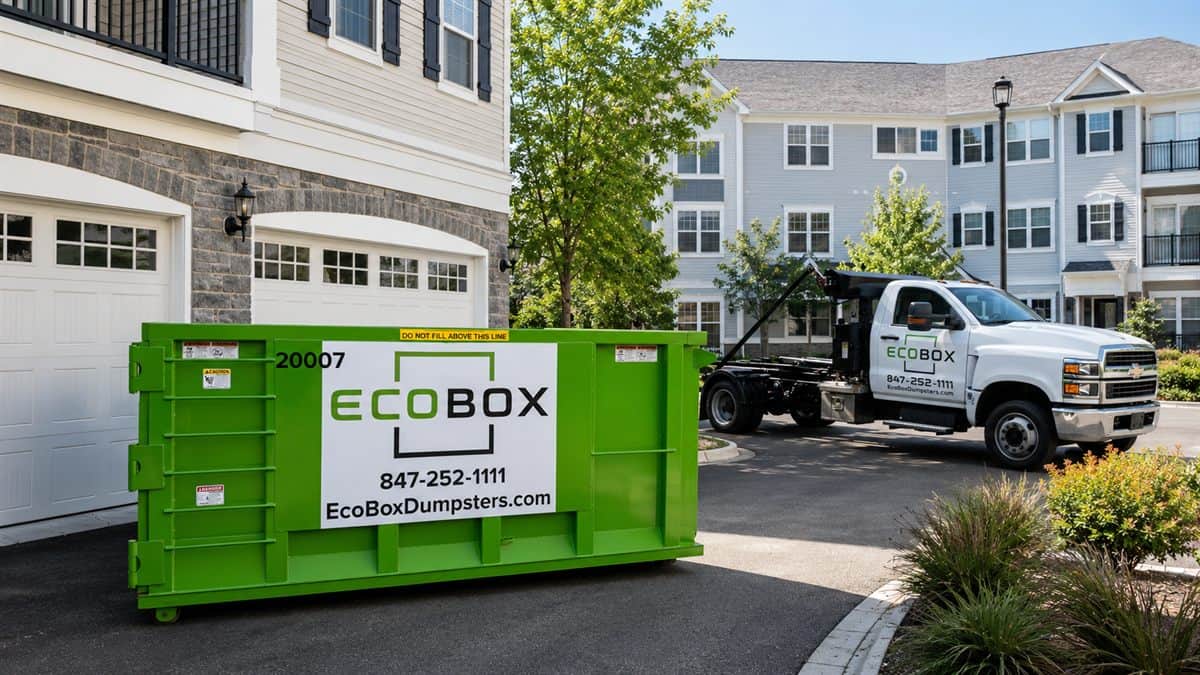
Renting a dumpster should make your project easier, not leave you with cracked concrete, rust stains, or a warning letter from your HOA. A heavy container and a large truck can be tough on driveways, especially when you are busy with cleaning, moving, or remodeling.
Planning for driveway protection ahead of time saves stress. It helps you avoid repair costs, keeps your curb appeal strong before outdoor gatherings, and reduces the chance of HOA fines. With the right driveway-safe dumpster rental, plus a few simple habits, you can keep your property looking great from drop-off to pick-up.
In this guide, we will walk through how to protect your driveway with smart placement, permits, load weight, and pick-up day prep so your project goes smoothly from start to finish.
Before a dumpster ever touches your property, take a good look at your driveway. You do not need special tools, just a bit of time and a careful eye.
Walk the full length of the driveway and check for:
If the driveway already has small cracks or weak areas, extra weight can make them worse. It helps to point these out when you schedule your dumpster so the driver knows where to avoid placing pressure.
Think about what your driveway is made of and how old it is. Different surfaces react in different ways:
Newer driveways and very old driveways both need extra care, just for different reasons. New material might not be fully settled yet, while older surfaces are more fragile.
It also helps to measure the space and think about access. Check:
Knowing this ahead of time helps you choose the right size container and the safest spot for drop-off.
One of the best ways to protect your driveway surface is to avoid dragging the container across it. You do not need to lay plywood: EcoBox deliveries use the RolliSkate driveway-protection system, which sets the container down on rollers instead of dragging it across the surface.
Here are a few tips that help on delivery day:
This helps the driver set the container down cleanly and reduces the chance of scuffs or marks.
Placement matters just as much as how the container is set down. When you talk with your dumpster provider, consider:
Sometimes, the safest choice is not the driveway at all. If your village or city allows it and you have the right permit, street placement might be a better option, especially for small or fragile driveways.
Working with a provider that focuses on driveway-safe dumpster rental makes this easier. Smaller-format trucks and careful, professional placement help lower the chance of chips, scratches, and cracking when the dumpster is set down or picked up.
Before your dumpster shows up, it is smart to check local rules. Different towns in Northeastern Illinois may have different requirements for where a dumpster can sit and for how long.
Common city or village rules may include:
Any needed permit is your responsibility, not EcoBox’s, so check with your municipality before delivery to avoid surprises.
If you live in a neighborhood with an HOA, you may also need to follow extra guidelines. HOAs often have rules about:
A quick message to your HOA or property manager can save a lot of trouble. Share simple details, such as:
This small step can help you avoid surprise letters, fees, or forced early removal.
Even with driveway protection and smart placement, how you load your dumpster matters. A heavier load adds extra pressure on your driveway and on the truck lifting the bin.
Watching your load weight helps:
When you start loading, think about balance. Aim to:
Certain materials get heavy faster than people expect. Use extra caution with:
If your project includes a lot of these materials, remember that roofing, concrete, dirt, rock, brick and asphalt go in the 10-yard dumpster only; a larger quantity means more 10-yard loads, not a bigger container.
Many driveway problems happen on pick-up day, not drop-off day. A loaded dumpster is heavier and the truck has less room for error. A little prep can make this stage smooth and simple.
Before the truck arrives, try to:
Weather also plays a role. In our North Chicago area, rain and thawed ground can soften the soil next to concrete or asphalt. If the truck has to turn sharply on wet ground, it can put extra pressure on the driveway edge. Whenever possible, schedule pickups when the ground is firm and there is no standing water around the approach.
Right before pick-up, do a quick safety check:
These small steps help the driver work smoothly and reduce jarring movements that might chip or crack surfaces.
Protecting your driveway during a dumpster rental comes down to a simple plan. Know your driveway and its weak spots, ask about driveway protection, choose smart placement, follow any city and HOA rules, watch your load weight, and prep the area on pick-up day. When all of these pieces work together, you can finish your project without leaving damage behind.
At EcoBox Dumpsters, we focus on driveway-safe dumpster rental for homes, HOAs, and job sites across North Chicago and the surrounding Northeastern Illinois communities. We use smaller-format trucks and the RolliSkate placement method to help protect residential surfaces, so you can focus on your project with peace of mind.
Make your cleanup easier with EcoBox Dumpsters and protect your property at the same time. Reserve a driveway-safe dumpster rental and we will deliver the right size containerso you can stay focused on your project. If you have questions about sizing, pricing, or scheduling, simply contact us and our team will help you plan the best solution.
More on this: residential rentals, current pricing, or talk to us about your project.
More on this: the 10-yard container roofing debris goes in, construction dumpster rental, commercial dumpster rental.