
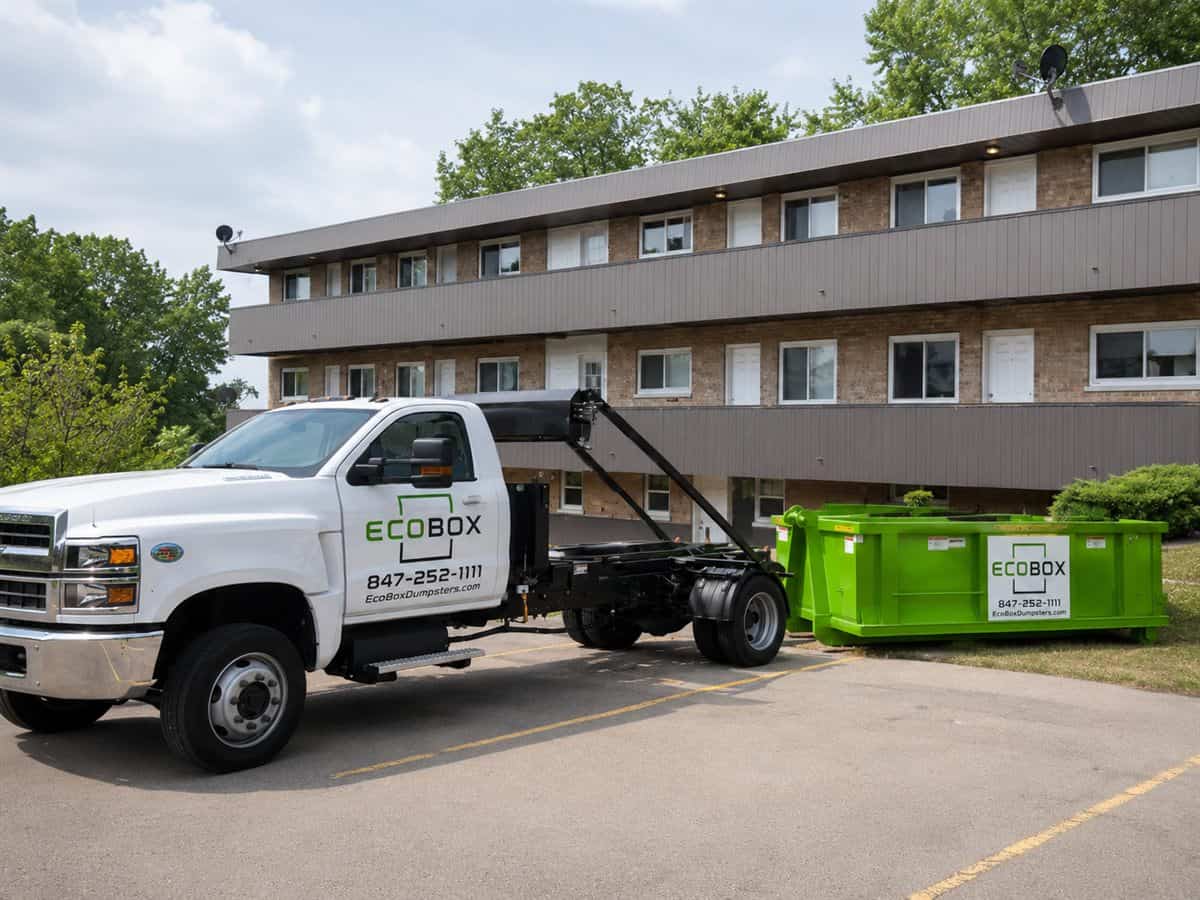
Remodeling a condo or apartment feels exciting right up until the first pile of broken tile or old cabinets starts to grow in your living room. In a multi-unit building, you cannot just toss debris out back and deal with it later. Tight hallways, shared elevators, limited parking, and close neighbors all make debris removal one of the biggest headaches in the project.
Planning debris removal from the start keeps your remodel moving. It helps you avoid delays, fines, and angry notes on your door. When you know how and where debris will go, your contractor can work faster and your building stays cleaner and safer for everyone.
Condos and apartments bring special challenges:
Compact, driveway-safe roll-off dumpsters are a smart option for many buildings in North Chicago and across Northeastern Illinois. They take up less room than a traditional dumpster and are easier to place in tight lots, shared parking areas, and alleys. This is especially helpful in late summer when more people are home, kids are getting ready for school, and everyone notices extra mess and noise.
Before that first swing of the hammer, you need to know what your building will allow. Every condo or apartment community has its own rules, and they can be strict when it comes to debris removal.
Common restrictions include:
Get written approval from your HOA, condo board, or property manager before you book any dumpster service. They may ask for certificates of insurance from both your contractor and your dumpster provider. This protects the building if any damage happens.
Good questions to ask building management:
If you skip this step, you risk fines or penalties for:
A short meeting or email with your manager up front is much easier than trying to fix a problem after the fact.
Not every dumpster works well in a condo or apartment setting. Traditional roll-off dumpsters are large and heavy. They can be hard to place in tight North Chicago parking lots or narrow alleys, and they may damage driveways, asphalt, or pavers.
Compact, driveway-safe dumpsters are built for these tighter spaces. They offer:
Picking the right size is just as important as picking the style. Think about what you are tearing out:
When you work with a local company that knows North Chicago and surrounding communities, you get help with:
A right-sized dumpster means fewer trips and a cleaner site from day one.
In a condo or apartment, debris removal is all about reducing traffic through shared spaces. The cleaner and more organized you are, the happier everyone will be.
Inside the unit, you can:
When it is time to move debris out, try to schedule hauling during lower-traffic hours. Midmorning or midafternoon often work better than early mornings or evenings, especially in late summer when families are juggling work, camps, and the back-to-school routines.
If your contractor is open to it, separating materials can help with recycling goals:
Make sure your contractor and crew know:
Clear instructions up front avoid confusion and last-minute scrambles on pickup day.
Even with the right dumpster, not everything from your remodel can be tossed in. Many items are restricted because they are hazardous or need special disposal.
Common items that usually cannot go in a remodel dumpster:
If you are not sure about an item, do not guess. Check labels for words like hazardous, caustic, flammable, or corrosive. Local cities and villages around Northeastern Illinois often offer special drop-off days or permanent sites for things like paint, chemicals, and electronics.
Putting banned items in a dumpster can lead to:
Set up a clear “do not toss” zone inside your unit. Use a box or corner of a room for things that need special handling. Tell every worker on the job what belongs there so nothing ends up in the dumpster by mistake.
Debris removal is messy and noisy, but good planning keeps it from becoming a building-wide problem. People notice when common areas stay clean, even while a big project is going on.
Simple ways to protect shared spaces:
Communication also goes a long way. With permission from management, post a short notice with:
Noise is a big issue in summer when windows are open. Try to keep the loudest demolition and hauling to midday instead of early mornings or late evenings. A well-placed, right-sized dumpster close to the building shortens each trip and cuts down on the number of noisy runs up and down the stairs or elevator.
A smoother condo or apartment remodel starts with a clear debris removal plan. Before demolition begins, confirm your building rules, decide how debris will leave the unit, and plan where it will go once it is outside.
For many projects, a compact, driveway-safe roll-off dumpster is the best option. It fits within the building’s parking limits, keeps debris contained, and speeds up cleanup so your contractor is not stuck moving piles back and forth. Good timing, especially around busy late-summer schedules, keeps your project moving without stepping on your neighbors’ daily routines.
When your project is in North Chicago or nearby communities, working with a local dumpster provider that understands tight urban spaces, building rules, and seasonal timing makes debris removal much easier. With the right setup, your remodel can be cleaner, faster, and far less stressful for you and everyone who shares your building.
Make your cleanup smoother by letting EcoBox Dumpsters handle delivery and hauling so you can focus on the work that matters. Explore our debris removal options to find the right dumpster and schedule for your project. Whether you are tackling a home renovation, yard overhaul, or construction job, we provide reliable service and clear pricing. If you are ready to schedule or have questions, contact us and we will help you plan the best solution.
More on this: what we take, current pricing, or talk to us about your project.
More on this: construction dumpster rental, commercial dumpster rental, residential dumpster rental.