
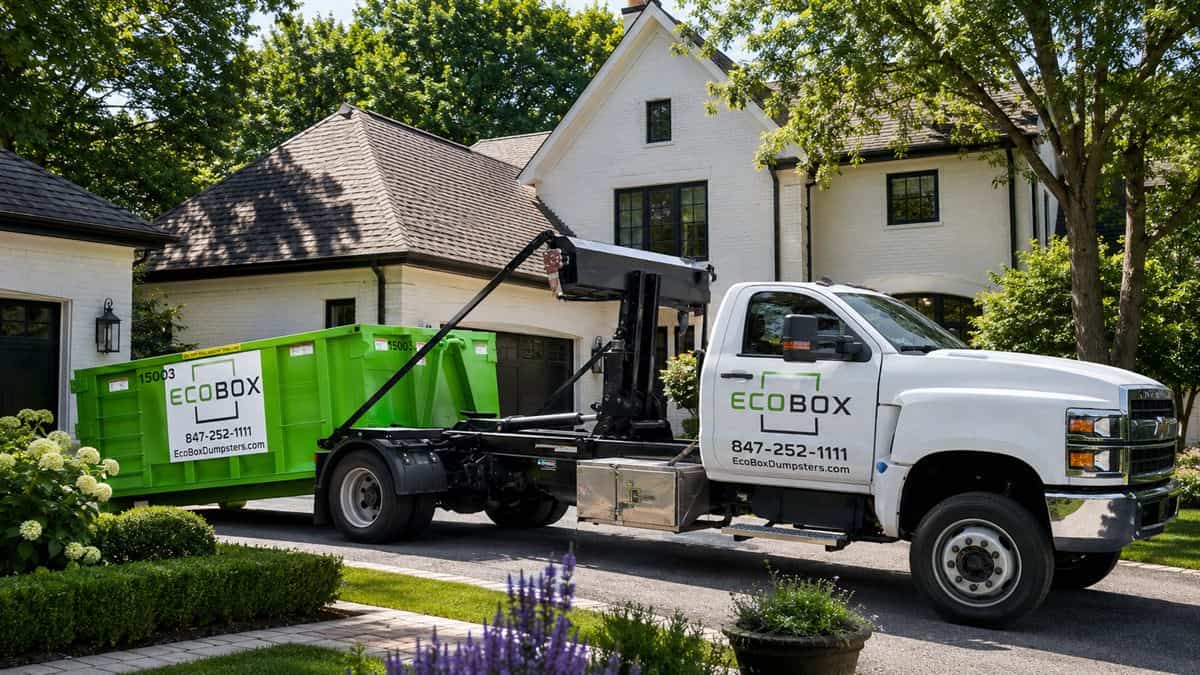
A roll-off dumpster is one of the easiest ways to handle a big cleanout or remodel, but only if the truck can actually get it into your driveway. A few quick measurements before delivery help prevent property damage, delays, or last-minute changes. That means less stress for you and a smoother day for everyone.
Residential-friendly dumpster rental services like ours are built with tight suburban driveways in mind. The trucks are smaller, and the containers are sized for neighborhoods, not just large construction sites. Even with that, the driver still needs clear space to back in, lower the dumpster, and pull away safely.
In this guide, we walk through a simple homeowner checklist: driveway width, length, slope, gate and fence openings, turn radius from the street, overhead clearance, and smart placement ideas. These checks are especially helpful before late-summer cleanouts and remodels, when trees are full and driveways are busy with cars, toys, and projects.
Start with the driveway itself. This is the main path the delivery truck will use, so good measurements here make the rest of the process much easier.
For driveway width, focus on the tightest spots, not the widest.
Most roll-off trucks need a driveway that is several feet wider than the dumpster itself so the driver can back in without scraping edges. If your narrowest point feels tight when you park your own vehicle, the driver may need to know that ahead of time.
Next, measure your driveway length. Use a tape measure from the street to the garage door or front of the house. Then think about how much flat space you have.
Ask yourself:
Mark the spot you think makes sense with chalk or small cones. This helps you see if doors, walkways, or garage entry areas will be blocked.
Slope is easy to miss, but it matters. A steep or uneven driveway can make it harder to safely set down a heavy container. To check slope:
Also look at the surface itself. Pavers, older concrete, and soft asphalt in summer heat can mark or shift under weight. EcoBox deliveries use the RolliSkate driveway-protection system, which sets the container down on rollers instead of dragging it across the surface. Let your dumpster provider know what type of surface you have so the driver can plan.
Even if your driveway is wide enough, tight gates and sharp turns from the street can cause trouble if no one checks them in advance.
For gates and fences, measure:
Make sure the gate can open all the way on delivery day. If bushes or gravel keep it from opening fully, plan to trim or move them before the truck arrives. The driver needs enough room to back through without scraping posts, hinges, or decorative tops.
Turn radius is the space the truck needs to swing in from the street into your driveway. This is especially important on cul-de-sacs, corners, and narrow neighborhood roads that are common in Northeastern Illinois suburbs.
To check it, stand at the curb and picture a truck as long as a large pickup with a trailer behind it. Look at:
Temporary changes can make a big difference. You might:
Now look up. Overhead clearance is just as important as the space on the ground. The truck needs room to tilt the container as it loads and unloads, so low objects can be a real problem.
Focus on:
You do not need perfect measurements, but rough estimates help. You can use a long pole or extended tape measure near a tree or line to guess the height, staying well away from power lines for safety. Pay extra attention to:
Also check your house and garage for overhangs. Porch roofs, balconies, and awnings can get in the way when the truck raises the dumpster to slide it off or pull it back on. Adjustable items like basketball hoops can often be raised or moved, but fixed structures need to be noted ahead of time.
Now that you know your measurements, it is time to pick the best spot. The goal is to balance convenience, protection, and safety.
For most homes, a good spot:
If you are worried about surface damage, tell us about the surface when you book so the driver can plan the placement. Many homeowners like to place the dumpster slightly off to one side of the driveway so one car can still come and go.
Think about traffic and visibility too. You want:
One simple trick is to draw a quick top-down sketch. On a piece of paper, mark:
Even a rough drawing helps you see possible issues, like a blocked side door or tight squeeze next to a planter. It also makes it easy to show your plan to the driver.
Before you schedule a residential-friendly dumpster rental, walk through this short checklist:
Once you have these details, you are ready to talk with your hauler. Share your measurements, notes, and even a few photos if you have them. At EcoBox Dumpsters, we use that information to help choose the right container size and plan a delivery that fits your property, from tight suburban drives to longer rural lanes in Northeastern Illinois. With a little prep and a clear checklist, your next cleanout or renovation can start with a smooth, safe, and low-stress dumpster delivery.
When you are ready to clear clutter, remodel a room, or tackle a whole-house cleanup, we make it easy to get the right size bin in your driveway without damaging your property. Reserve your residential-friendly dumpster rental and we will handle the delivery, placement, and pickup on your schedule. If you have questions about sizing, timelines, or pricing, simply contact us and our EcoBox Dumpsters team will walk you through the options.
More on this: residential rentals, current pricing, or talk to us about your project.
More on this: the 10-yard container roofing debris goes in, construction dumpster rental, who is responsible for a dumpster permit.